
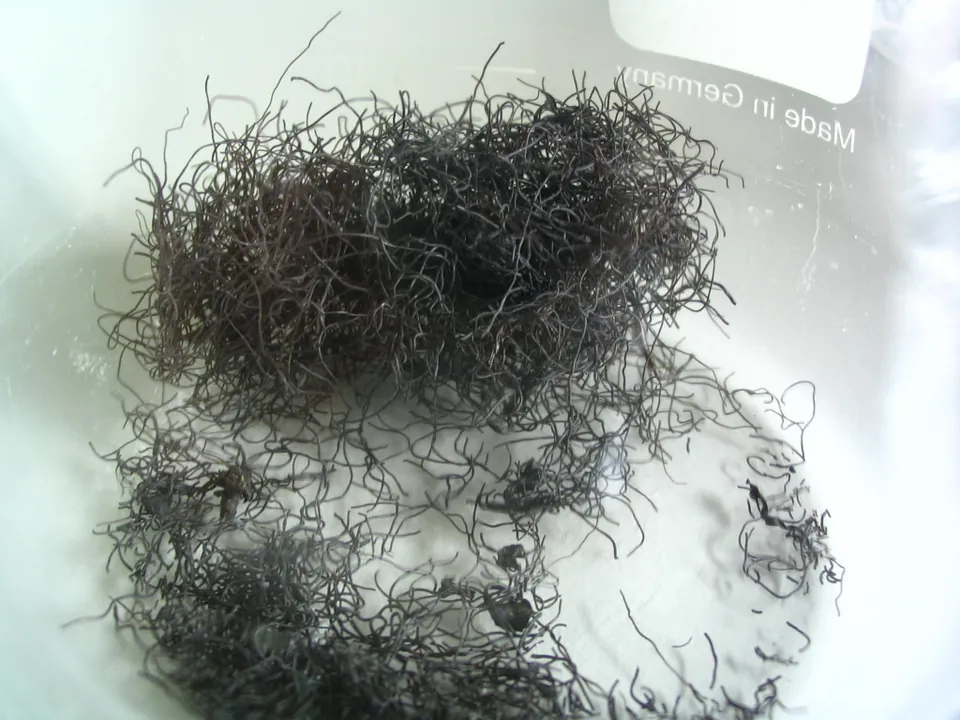
发菜, photo 1 of 1

Photo credit

Photo
Nostoc flagelliforme fake
By
The original uploader was Polyhedron at Chinese Wikipedia.
Licence
CC BY-SA 3.0
Source
Wikimedia Commons
Changes
Cropped and resized

发菜

髮菜
fàcài
noun

Meanings

  1. 1 hair moss; long thread moss (Nostoc flagelliforme)
  2. 2 edible black algae prized in Cantonese cuisine

About the ingredient

蔬菜 Vegetables

Fine black strands like a tangle of hair, a dried blue-green alga from arid land, with no real taste of its own. Soaked and simmered in Cantonese braises and soups. Gathering and selling it is banned in mainland China; fakes are common.

Examples

HSK 7-9
广东人过年喜欢吃发菜蚝豉,取"发财好市"的好意头。
Guǎngdōng rén guònián xǐhuan chī fàcài háochǐ, qǔ " fācái hǎoshì " de hǎoyìtou.
Cantonese eat hair moss with dried oysters at New Year for the auspicious pun on 'get rich, good business.'
HSK 7-9
Yóuyú guòdù cǎiwā, fàcài zài Zhōngguó yǐ bèi jìnzhǐ cǎijí.
Due to over-harvesting, gathering hair moss has been banned in China.

Tips

culture
发菜 sounds nearly identical to 发财 ('get rich'), making it a Lunar New Year staple in Cantonese kitchens. Pair it with 蚝豉 (dried oyster, homophone of 'good market') for the toast 发财好市. Wild harvesting was banned in 2000 to protect Inner Mongolian grasslands; most 发菜 sold today is cultivated or substitute.

Stroke Order

发 fā
菜 cài