
拔丝地瓜, photo 1 of 3
拔丝地瓜, photo 2 of 3
拔丝地瓜, photo 3 of 3
Typical photo

Photo credit

Photo
拔丝地瓜
By
董辰兴
Licence
CC BY-SA 4.0
Source
Wikimedia Commons
Changes
Cropped and resized

Photo credit

Photo
Basi digua 2009 03
By
Rolfmueller
Licence
CC BY-SA 3.0
Source
Wikimedia Commons
Changes
Cropped and resized

Photo credit

Photo
地瓜拔絲, Yi Yuan Peking Cuisine, The Westin Taipei, 頤園, 頤園北京料理, 六福皇宮, 台北威斯汀六福皇宮, 台北 (19609451643)
By
bryan... from Taipei, Taiwan
Licence
CC BY-SA 2.0
Source
Wikimedia Commons
Changes
Cropped and resized

拔丝地瓜

拔絲地瓜
básī dìguā
Also on menus as 拔丝红薯
noun Not spicy

Measure Word

Meanings

  1. 1 candied sweet potato

About the dish

鲁菜 Shandong · 甜品 Dessert

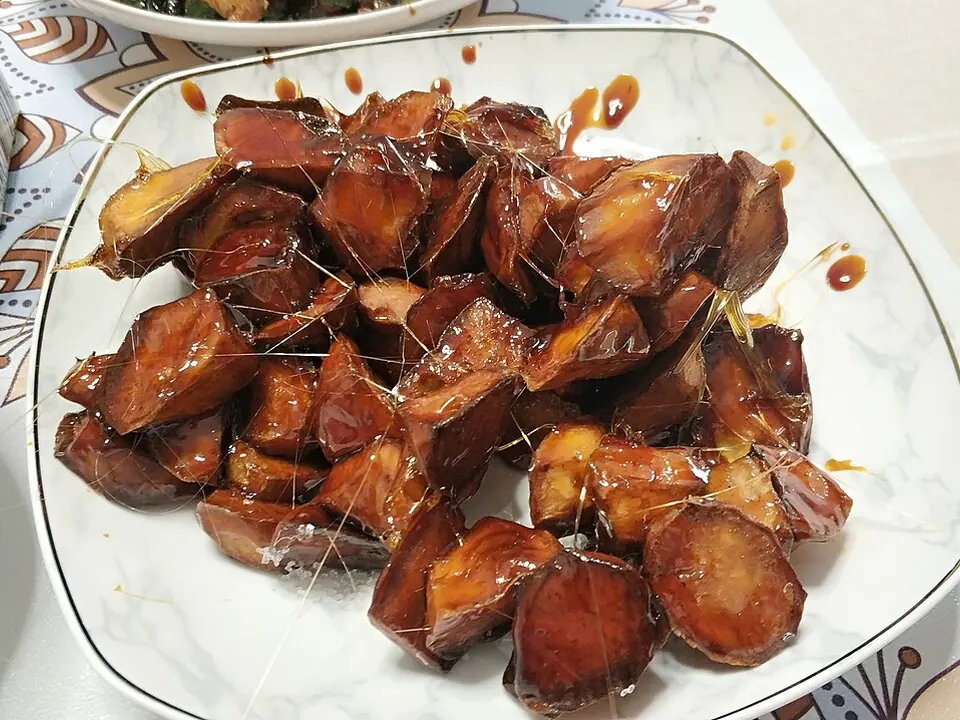
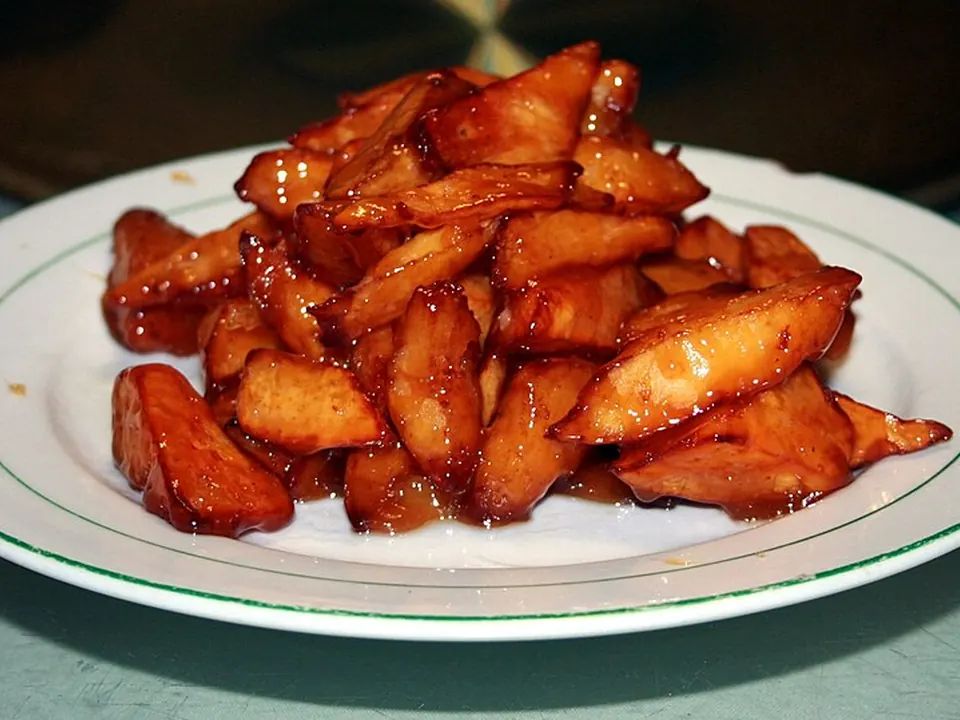
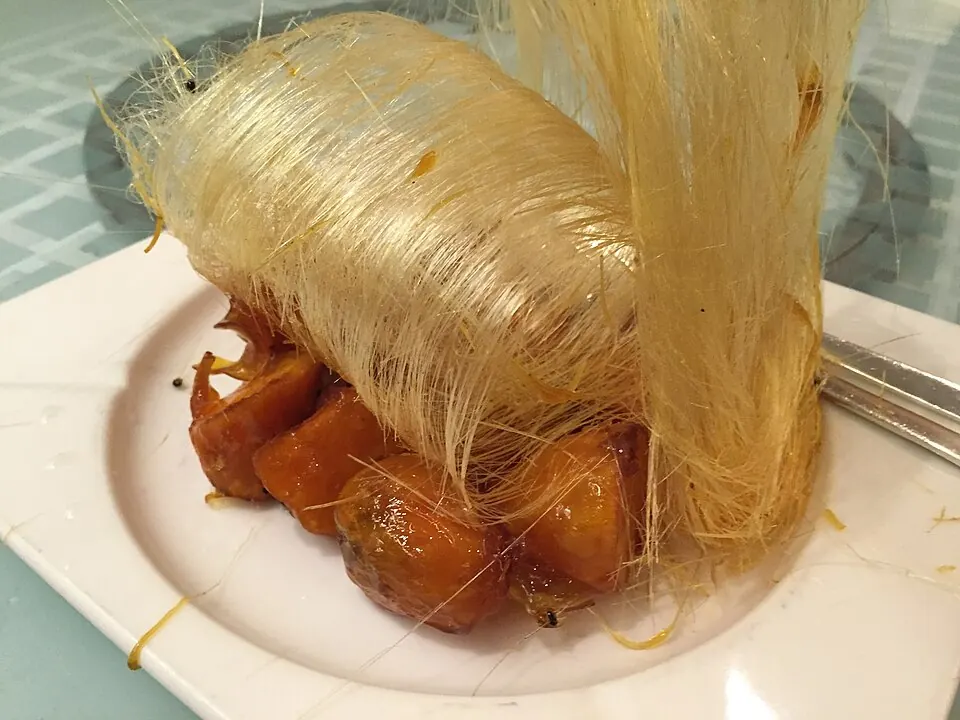
Chunks of sweet potato deep-fried, then coated in hot caramel that pulls into long threads as you lift a piece. Eat it hot, dipped in the bowl of cold water served with it so the sugar sets crisp.

Examples

HSK 6
Básī dìguā yào chènrè chī, liáng le táng jiù yìng le.
Candied sweet potato should be eaten hot; once it cools, the sugar hardens.
HSK 7-9
Jiāqǐ yí kuài básī dìguā, táng huì lāchū chángcháng de sī.
When you pick up a piece of candied sweet potato, the sugar stretches into long threads.

Tips

culture
It comes with a bowl of cold water. Dipping each piece sets the caramel, so it turns crisp and is cool enough to eat.
usage
地瓜 is the usual word for sweet potato in northern China and Taiwan. Where people say 红薯, menus write 拔丝红薯.

Stroke Order

拔 bá
丝 sī
地 dì
瓜 guā