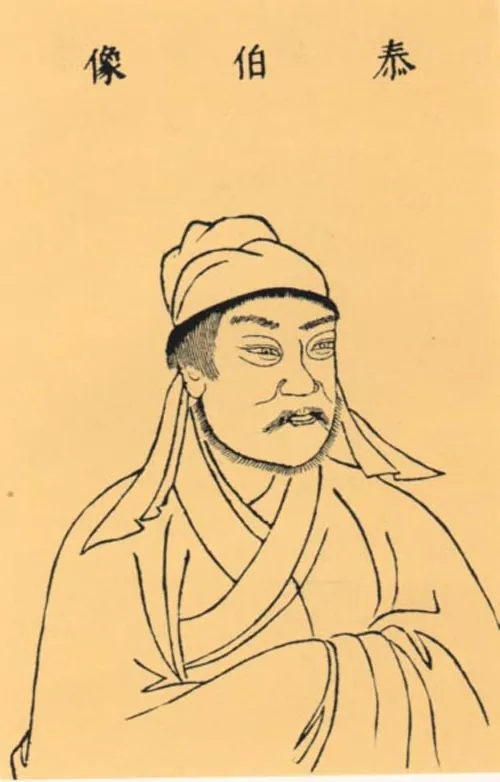
Son of King Tai of Zhou who went south so the throne could pass through his youngest brother to the future 周文王, and became the first ruler of 吴国. Confucius called him supremely virtuous; Book 8 of the 论语 bears his name.
The idiom 'the burden is heavy and the road is long' comes from the Taibo book of the Analects.
Tips
history
He and his brother 仲雍 cut their hair and tattooed their bodies like the southern tribes, to show they were unfit to rule. The idiom 断发文身, 'cropped hair and tattooed body', still names this custom of the ancient south.
usage
Each book of the Analects is named after its opening words. Book 8 begins with Confucius's praise 泰伯,其可谓至德也已矣, 'Taibo may be called supremely virtuous', so it is cited as 《论语·泰伯》.