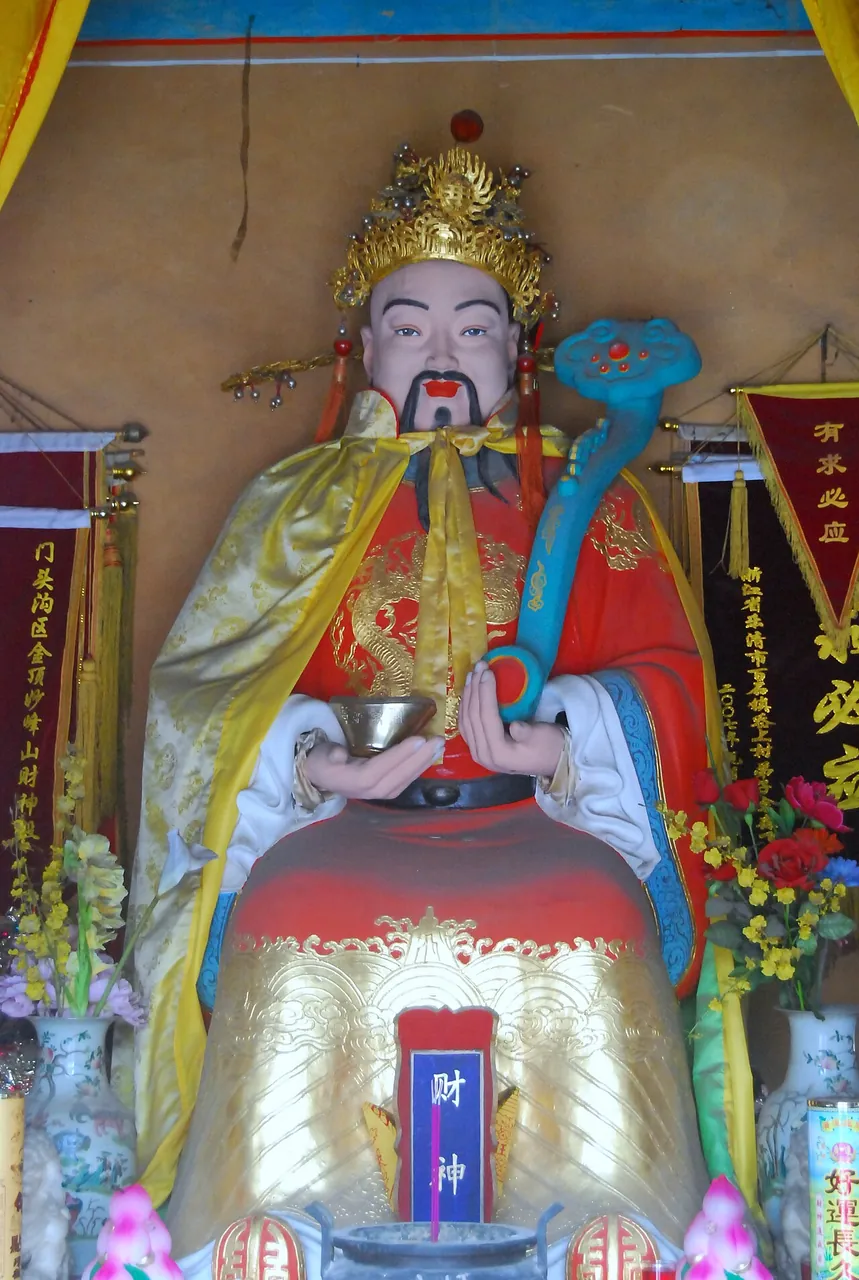
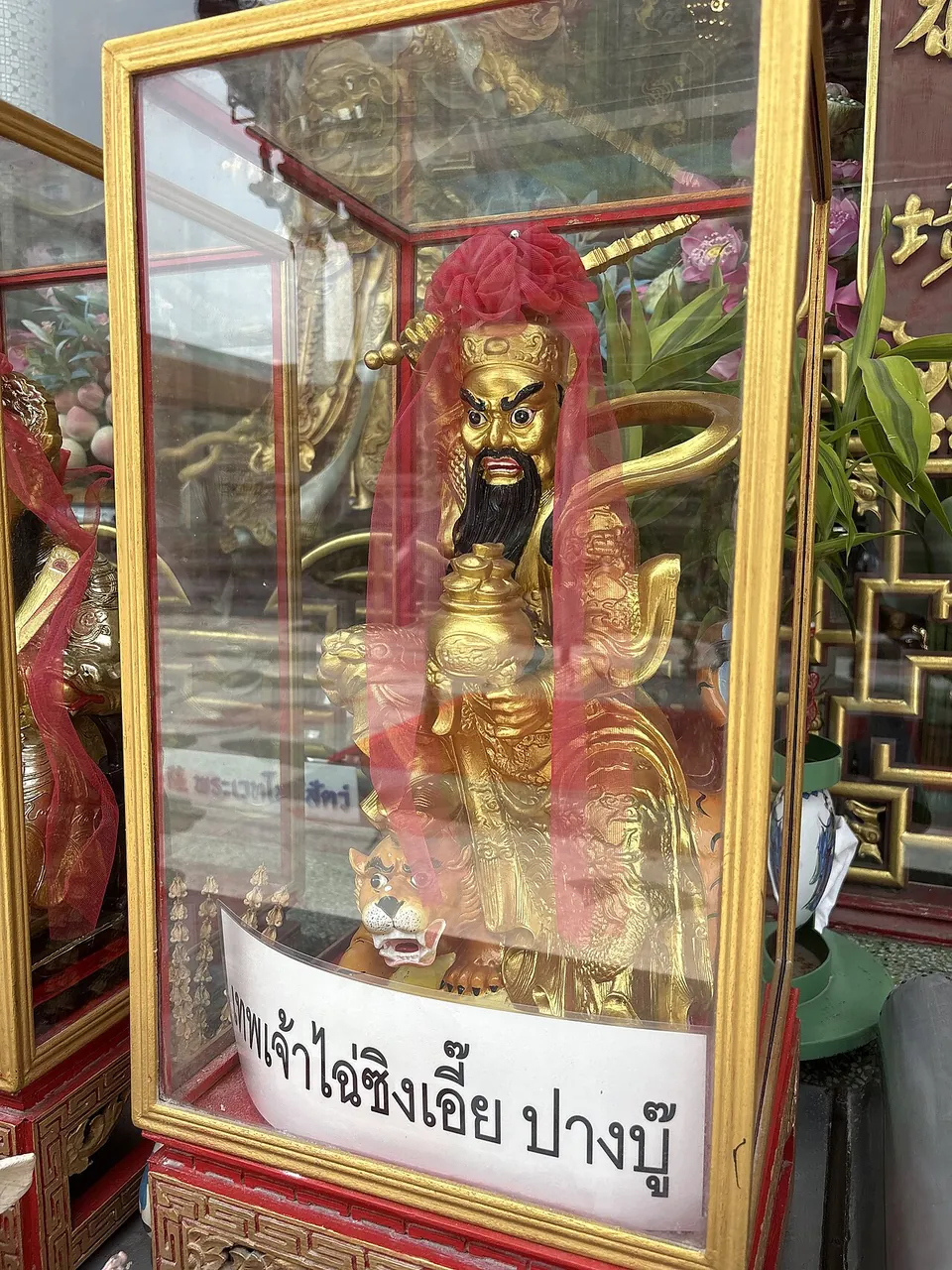
God of wealth in Chinese folk religion, shown in an official's robes holding a gold ingot. Families welcome him on the fifth day of the new year (接财神), and people call whoever brings them money their 财神爷.
On the fifth day of the first lunar month, many people set off firecrackers to welcome the God of Wealth.
Tips
culture
Folk religion has several wealth gods. The civil kind, 文财神, include 范蠡; the martial kind, 武财神, include 赵公明 and 关公, and merchants tend to favour the martial ones.
usage
The 爷 is a respectful 'lord, sir', not 'grandpa'. Other folk gods carry it too: 灶王爷, the Kitchen God, and 阎王爷, the King of Hell.
Chinese folk deity (or family of deities) who brings prosperity. Worshipped through New Year posters, ingot-shaped offerings, and firecrackers on the fifth day of the Lunar New Year. Shopkeepers display statues of him at cash registers for good business luck.