
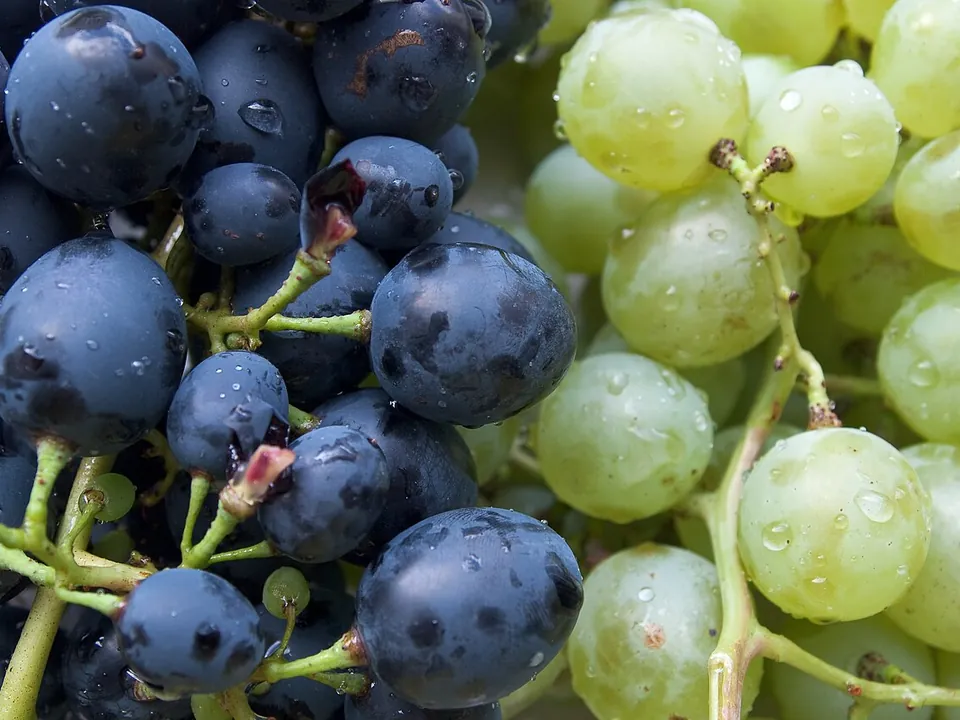
葡萄, photo 1 of 3
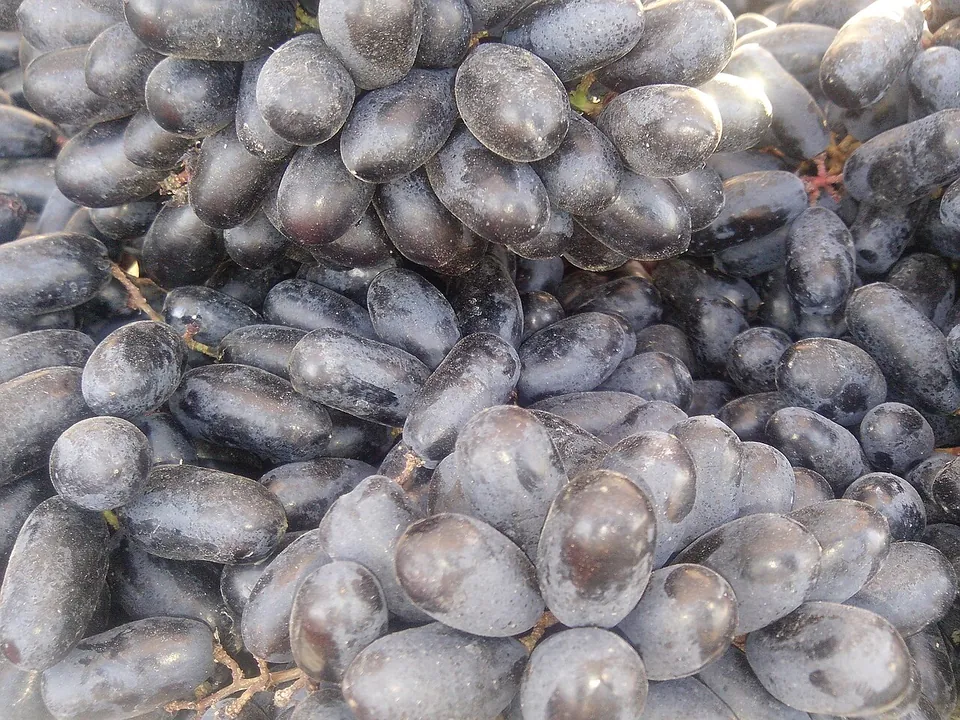
葡萄, photo 2 of 3
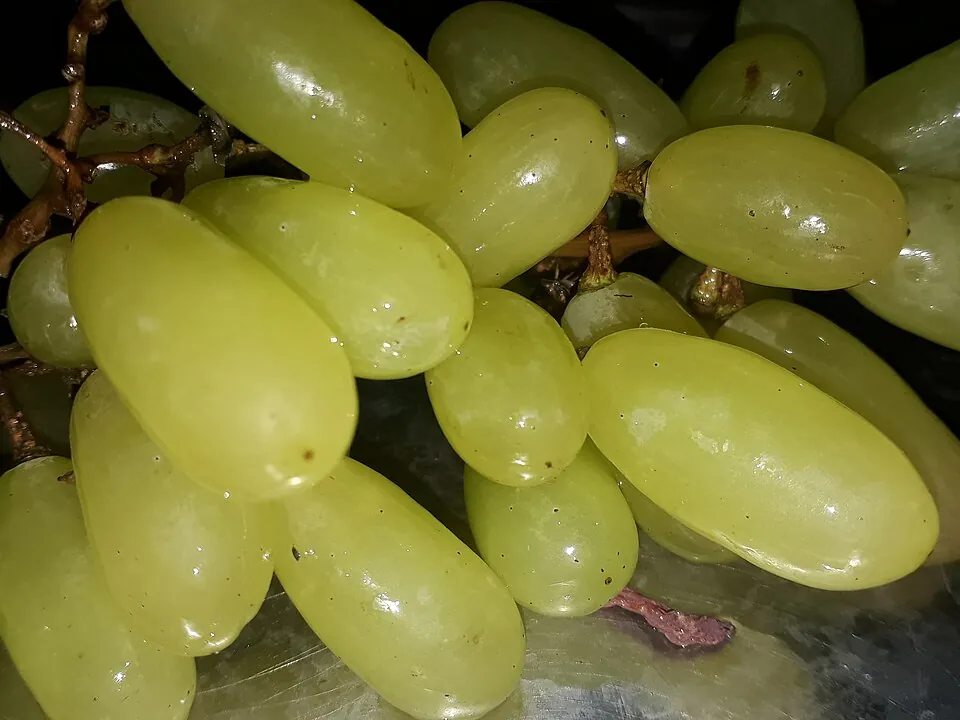
葡萄, photo 3 of 3

Photo credit

Photo
Grapes, Rostov-on-Don, Russia
By
Vyacheslav Argenberg
Licence
CC BY 4.0
Source
Wikimedia Commons
Changes
Cropped and resized

Photo credit

Photo
"Black Grapes of Salem District"
By
Thamizhpparithi Maari
Licence
CC BY-SA 3.0
Source
Wikimedia Commons
Changes
Cropped and resized

Photo credit

Photo
A bunch of grapes a
By
Vijay Kumar Soren
Licence
CC BY-SA 4.0
Source
Wikimedia Commons
Changes
Cropped and resized

葡萄

pútao
noun HSK 4 #6,733

Measure Word

一串葡萄 chuàn

Meanings

  1. 1 grape

About the ingredient

水果 Fruit

Mostly dark purple Kyoho grapes, whose skins slip off, and green kinds, some of them imported. Eaten raw, usually peeled one by one with the bitter seeds spat out; rarely cooked.

Characters

Both characters are purely phonetic - an ancient loanword from a Silk Road language

Examples

HSK 4
Chī budào pútao shuō pútao suān.
If you can't eat the grapes, say they're sour. (Sour grapes.)
HSK 6
Zhè chuàn pútao hěn tián.
This bunch of grapes is very sweet.
HSK 7-9
Xīnjiāng de pútao tèbié yǒumíng.
Xinjiang's grapes are especially famous.

Tips

history
葡萄 is an ancient loanword brought to China via the Silk Road - it likely derives from an Iranian language. The characters are purely phonetic and have no independent meaning in this context.
culture
Xinjiang's Turpan (吐鲁番) region is China's grape capital, famous for its extremely sweet grapes due to the hot, dry climate. The expression 吃不到葡萄说葡萄酸 is the Chinese equivalent of Aesop's 'sour grapes.'

Stroke Order

葡 pú
萄 táo